Mr. K's Technology
Computer Science Foundations
#3
Demonstrate understanding of electrical circuits and devices and relate to the physical laws (such as Ohm's Law and power laws) that govern behaviors of electrical circuits and devices. Accurately apply these physical laws to solve problems. For example, calculate the resistance of a DC circuit with a given DC voltage and current.
Your Project
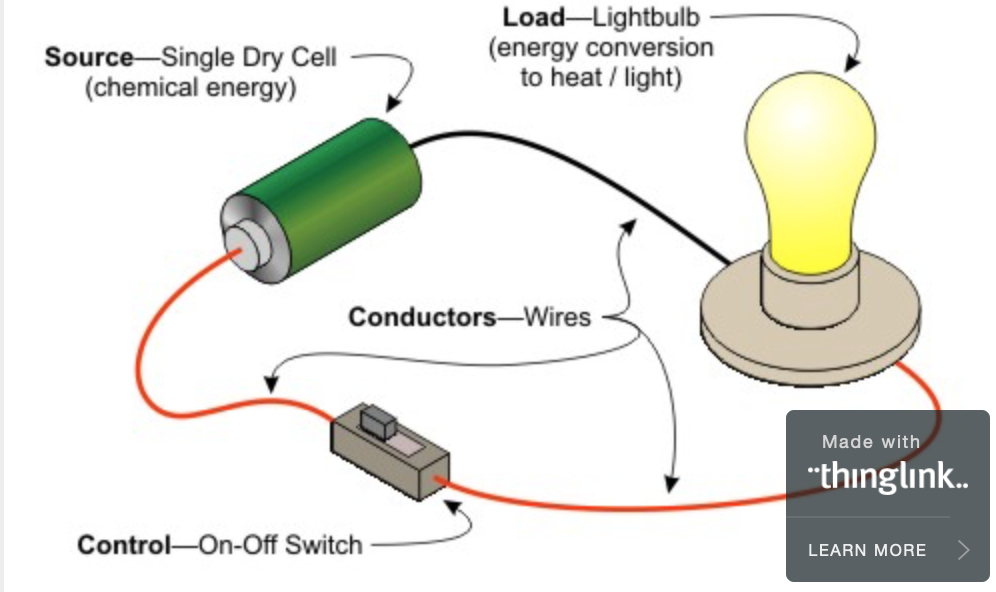
An electric circuit is a path in which electrons from a voltage or current source flow. The point where those electrons enter an electrical circuit is called the "source" of electrons.
A simple circuit contains the minimum things needed to have a functioning electric circuit. A simple circuit requires three (3) things:
1. A source of electrical potential difference or voltage. (typically, a battery or electrical outlet)
2. A conductive path which would allow for the movement of charges. (typically made of wire)
3. An electrical resistance (resistor) which is loosely defined as any object that uses electricity to do work.
This project is due today. Turn in when completed.
Use Google Drawing to create the weirdest circuit you can find using images and some text (Example might be a potato powering a lightbulb)